Environmental responsibility and sustainability have become an increasingly important topic in the textile industry. Traditional textile production is often associated with high resource use, pollution and social and environmental impacts. As a result, many companies have started to look for ways to make textile production more environmentally friendly and sustainable.
One important step towards environmentally responsible production is the choice of materials. Many companies are looking for alternatives to traditional synthetic fibres made from petroleum-based plastic. Instead, natural fibres such as organic cotton, linen, bamboo and tencel are used, which come from renewable sources and require fewer chemical fertilisers and pesticides.
In addition to fibres, it is also important to reduce the environmental impact of the production process. Companies are looking for ways to reduce water use, use more energy-efficient machinery and manage waste and emissions. Some companies have also invested in the use of renewable energy to reduce the carbon footprint of production.
Sustainability can also be promoted through a product's life cycle. Many companies pay attention to product design so that products are durable and of high quality, which extends their service life and reduces consumption. In addition, consumers are encouraged, through raising awareness, to choose environmentally friendly and ethically produced textiles.
An exciting and creative way to reuse production waste and turn it into new and stylish workwear is upcycling. Upcycling is the process of transforming textile waste, creating new usable items from it. For example, pieces of fabric can be turned into practical workwear such as jackets, trousers or dresses. Sample products and offcuts can become unique accessories such as bags or headwear. Even damaged items find a new purpose in upcycling.
Upcycled workwear is a great way to reuse the production waste of the textile industry. These garments are environmentally friendly, stylish and unique. Upcycling supports sustainable consumption and contributes to the health of our planet.

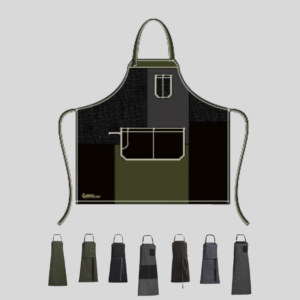

Upcycling aprons from the Danish brand Kentaur
More and more companies are also committed to ethical production and to improving working conditions. They monitor what happens in the supply chain and ensure that workers have fair working conditions and fair pay. Such companies also follow the principles of social responsibility, supporting local communities and promoting fair trade.
In addition to the measures mentioned above, it is also important to highlight recycling in textile production. One excellent example of this is fibre made from recycled plastic bottles. These fibres, often also known as rPET fibres (recycled polyethylene terephthalate), are made from used plastic bottles that have been processed and converted into textile.
Fibres made from recycled PET bottles are strong, durable and of high quality, which makes them an excellent choice for a wide range of textile products. These fibres offer the same comfort and performance as traditional synthetic fibres, while also helping to reduce the amount of plastic waste and conserve natural resources.
By using fibres made from recycled PET bottles in textile production, companies help reduce the amount of plastic waste and reduce the need for new natural resources. This is an important step towards textile production based on the principle of recycling, thereby reducing the amount of waste and damage to nature.
In addition, the use of recyclable PET fibres offers the opportunity to create high-quality and sustainable textile products that meet both environmental and consumer needs. This allows us to combine style and responsibility and take a step closer to a more sustainable and conscious future.
In conclusion, environmental responsibility and sustainability are becoming increasingly important in the textile industry. Companies that invest in environmentally friendly production not only reduce their negative impact on the environment, but can also build engaging and responsible brands and achieve long-term success in the market. Consumers have become more aware of environmental issues and increasingly prefer ecologically and ethically made products. It is therefore important that the textile industry adapts to be sustainable and environmentally friendly, in order to meet consumer demands and safeguard the health and wellbeing of the planet for future generations.