The professional kitchen has changed. Has the chef jacket?
Just ten years ago, the standard in a professional kitchen was the classic chef jacket made from a cotton and polyester blend fabric. These jackets are durable, easy-care and well suited to industrial laundering. But as professional gastronomy has changed, so have the demands placed on workwear.
Today, however, the situation is markedly different.
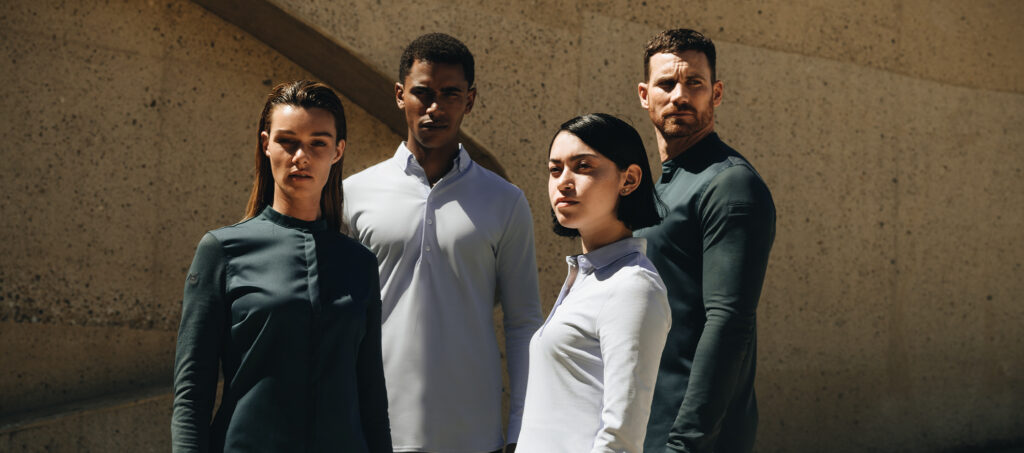
Fine dining restaurants, open kitchens, show kitchens and fast-paced restaurants have placed entirely new demands on chefs’ workwear. A chef is constantly on the move, lifting heavy pans, reaching up to high shelves, bending down and often working 10–12 hours at a stretch in high temperatures. It is no wonder that a quality chef jacket is increasingly compared to technical sportswear.
That is precisely why the biggest buzzwords of the past five to ten years have been:
- stretch fabrics;
- breathable jersey piqué panels;
- TENCEL™ Lyocell;
- ergonomic cuts;
- sustainable materials.
These are no longer just extra features – in premium chef clothing they have become the new standard.
Classic cotton/polyester – still popular for good reason
When it comes to durability, the classic cotton and polyester blend fabric still holds a very strong position. There are several reasons for this.
This kind of fabric withstands industrial laundering well, keeps its shape even after hundreds of washes and costs less than the newer technical fabrics. That is why it is still used in large kitchens, schools, hospitals, food service businesses and catering companies.
Its advantages are: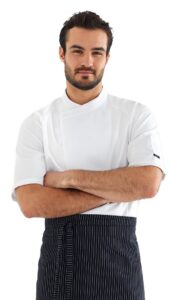
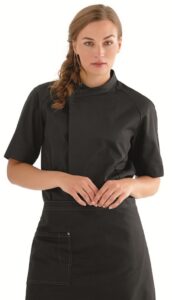
- very good abrasion resistance;
- easy care;
- tolerance of high-temperature washing;
- a long service life;
- a lower purchase price.
It does, however, have its drawbacks.
Classic fabric has virtually no stretch and in a hot kitchen it can feel heavier and stiffer. The more active the work, the more a chef comes to appreciate a material that moves with the body.
Stretch fabrics – the biggest change in the development of chef jackets
If you had to name just one innovation that has changed chef jackets most over the past decade, it would be stretch. Stretch does not mean that the whole jacket is made of elastane. Usually only a few per cent of elastic fibres are added to the fabric, such as elastane or elastolefin (XLA®), which give the garment a natural flexibility. This small change makes a surprising difference to wearing comfort.
Stretch allows for:
- freer movement;
- less strain on the shoulders;
- more comfortable work at high shelves;
- a better fit for different body types;
- a more modern slim-fit cut without losing freedom of movement.
These days many professional chefs expect a quality chef jacket to have at least some stretch.
Jersey piqué – the secret lies in the back
One of the more interesting developments is the use of jersey piqué.
While the classic chef jacket is made from a single fabric, newer models use different materials in different areas.
Most commonly, the construction is: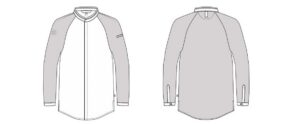
- the front from a strong, hard-wearing fabric;
- the back from breathable jersey piqué;
- the sleeves likewise from a stretch or breathable fabric.
This solution significantly improves air circulation. When a chef works in front of a grill, hob or oven, most of the heat builds up on the back. Jersey piqué lets moisture evaporate more quickly and helps keep body temperature more stable. Several leading manufacturers now use this solution in their premium collections.
TENCEL™ Lyocell – why is everyone talking about it?
While stretch improves movement, TENCEL™ improves wearing comfort.
TENCEL™ Lyocell is made from wood cellulose, and its fibre is valued above all for the following properties:
- a very soft surface;
- excellent moisture-wicking;
- breathability;
- natural temperature regulation;
- less creasing than cotton;
- a sustainable production process.
In the kitchen this means something very simple. When a chef sweats, TENCEL™ draws moisture away from the body more quickly and the garment feels dry for longer. That makes a long working day noticeably more comfortable.
What are the leading manufacturers doing?
KENTAUR – durability meets sustainability
The Danish manufacturer Kentaur has been known for years for its exceptionally durable chef clothing.
A good fit for: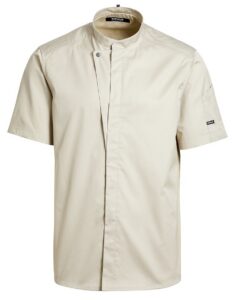
- large kitchens;
- hotels;
- businesses where garments are washed in industrial laundries.
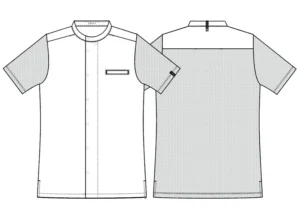
While their classic collections still centre on strong cotton/polyester fabrics, the newer TENCEL™ collections add a breathable jersey back and softer wearing comfort. Kentaur's aim has not been to make the chef jacket sporty, but to refine classic workwear with modern materials.
Le Nouveau Chef – premium-class comfort
If any manufacturer has helped turn the chef jacket into a fashion item, it is the Dutch Le Nouveau Chef.
Their design philosophy combines: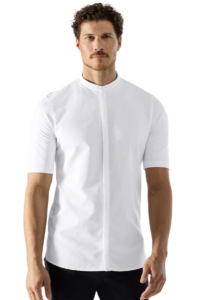
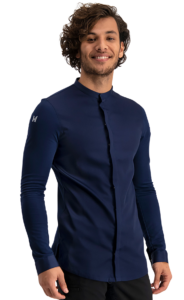
- TENCEL™ fabrics;
- stretch panels;
- a polo piqué back;
- minimalist design;
- modern cuts.
Le Nouveau Chef focuses above all on fine dining restaurants and open kitchens, where a garment has to look as presentable as it is comfortable.
Chef Works – technical solutions for everyday work
The American brand Chef Works has been one of the first major manufacturers to bring technical solutions such as Cool Vent™ mesh panels, lightweight fabrics and stretch materials to chef jackets.
In addition to classic models, they offer: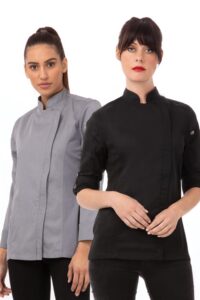
- Cool Vent™ mesh panels;
- stretch fabrics;
- lighter materials;
- a range of cuts to suit the nature of the work.
This makes Chef Works a good choice for restaurants that want to combine practicality with a modern look.
Karlowsky – one of the fastest-developing manufacturers
In recent years, the German Karlowsky has made a remarkable leap forward.
Their new DIAMOND CUT® collection combines practically all of today's materials: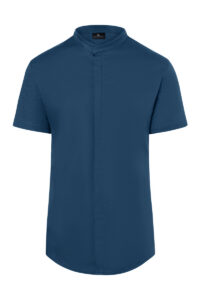
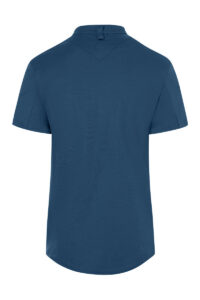
- TENCEL™ Lyocell;
- 4% elastolefin (XLA® stretch);
- a breathable jersey piqué back;
- recycled polyester;
- an ergonomic slim-fit cut.
This means that the front of the garment is durable and elegant, while the back and sleeves move with the wearer and help to disperse heat better.
LAFONT – the French tradition of chef clothing meets modern functionality
LAFONT has taken traditional design further, adding modern materials and functional details to it.
LAFONT's strengths are: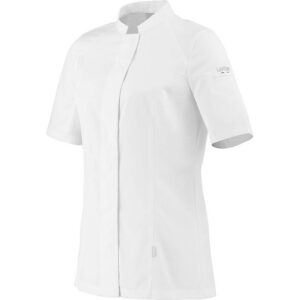
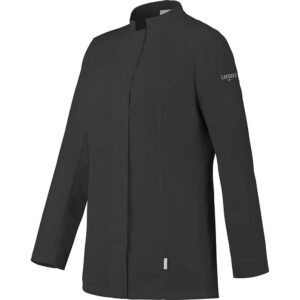
- quality cotton/polyester fabrics that stand up well to everyday use;
- ergonomic cuts that ensure good freedom of movement;
- mesh panels or ventilation openings on selected models to improve breathability;
- very high-quality finishing and attention to detail
Velilla – lightweight, breathable microfibre chef jackets
The Spanish Velilla is known for its lightweight and comfortable microfibre chef jackets . Microfibre wicks moisture well, dries quickly and is excellently breathable, which makes it particularly well suited to a hot kitchen environment. Many models also have mesh panels on the back or under the arms, which improve ventilation and increase wearing comfort.
Best suited to:
- hot, fast-paced kitchens;
- cafés and restaurants;
- catering companies;
- chefs who prefer lightweight, easy-care workwear.
Will the classic chef jacket disappear?
Certainly not.
Cotton and polyester blend fabrics will remain the backbone of the professional kitchen for a long time to come. They are reliable, durable and, for many businesses, the most sensible investment.
What is clear, though, is that in the premium segment development is moving ever more towards technical materials.
Today chefs no longer choose on colour or cut alone. These questions have become increasingly important:
- Does the back breathe?
- Does the jacket stretch?
- Does the material wick moisture?
- Is it comfortable to work in for a whole shift?
These questions increasingly determine the purchase decision.
Where a few years ago a quality chef jacket meant above all a durable fabric, today it means a great deal more. The best manufacturers now combine the strengths of classic workwear with modern technical materials. Stretch adds freedom of movement, jersey piqué improves breathability and TENCEL™ Lyocell makes the working day noticeably more comfortable.
Brands such as Kentaur, Le Nouveau Chef, Chef Works, LaFont, Karlowsky and Velilla approach this goal in different ways, but the direction is the same for all of them – the chef jacket is no longer simply a uniform, but an important tool that helps the chef focus on what matters most: making excellent food.
- Kentaur – durability and TENCEL™
- Le Nouveau Chef – premium design and innovation
- Chef Works – technical solutions (Cool Vent™, stretch)
- Karlowsky – TENCEL™, stretch and jersey piqué in one product
- La Font – classic French quality with modern solutions
- Velilla – microfibre, light weight and fast drying